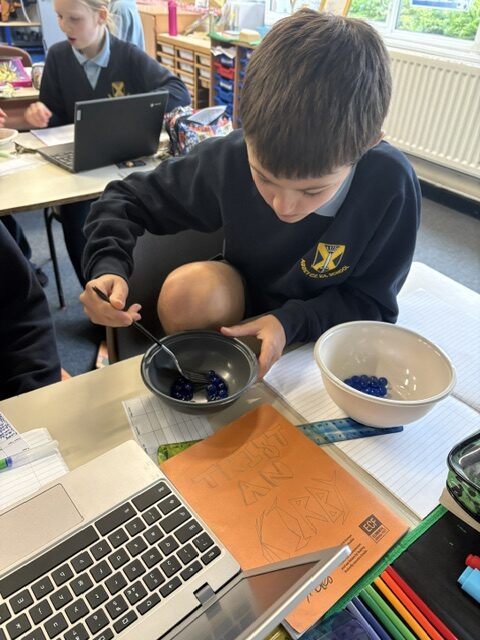
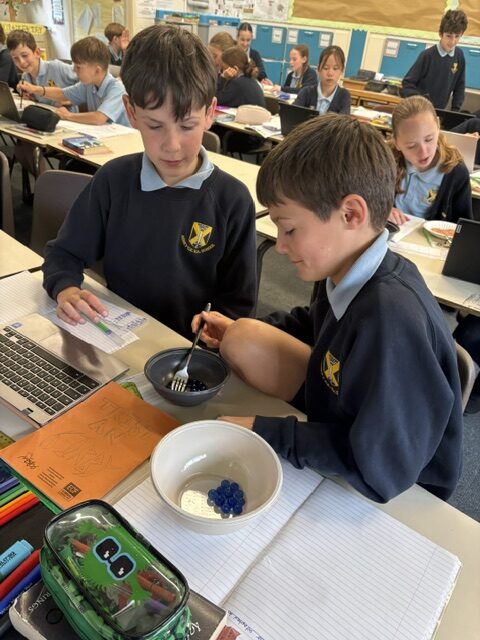
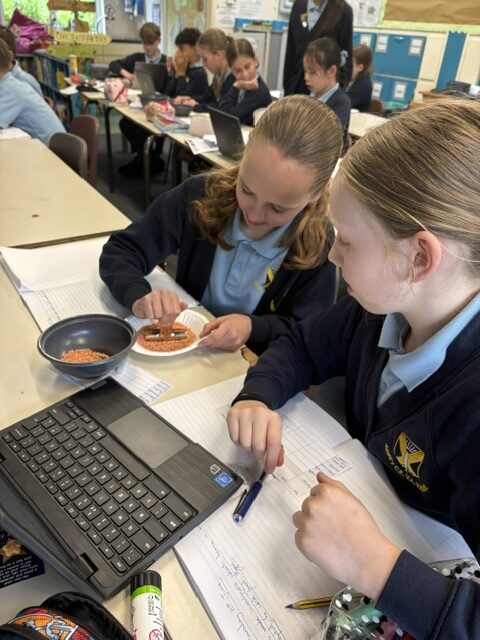
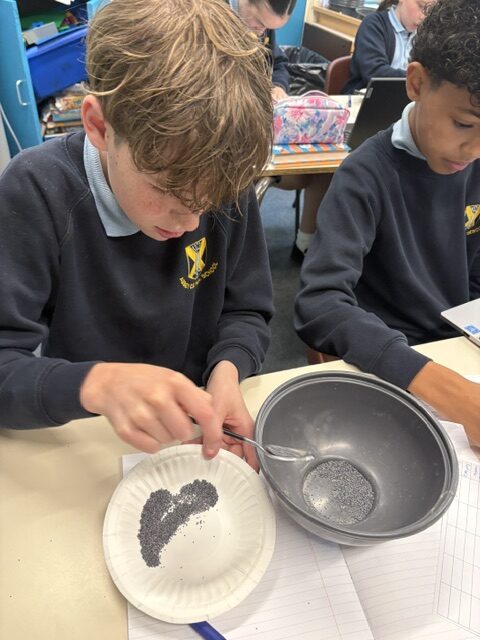
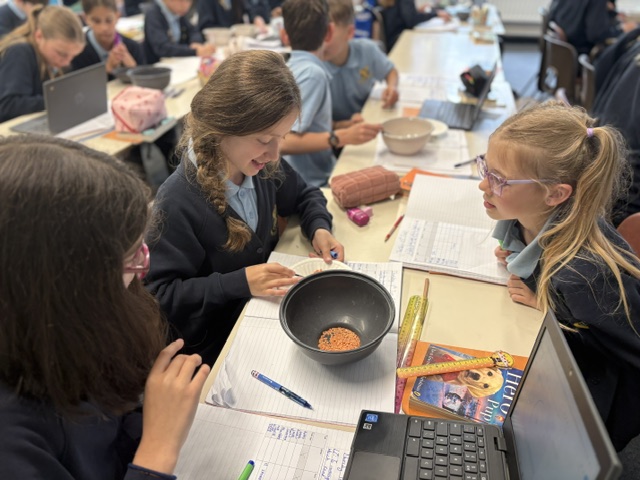
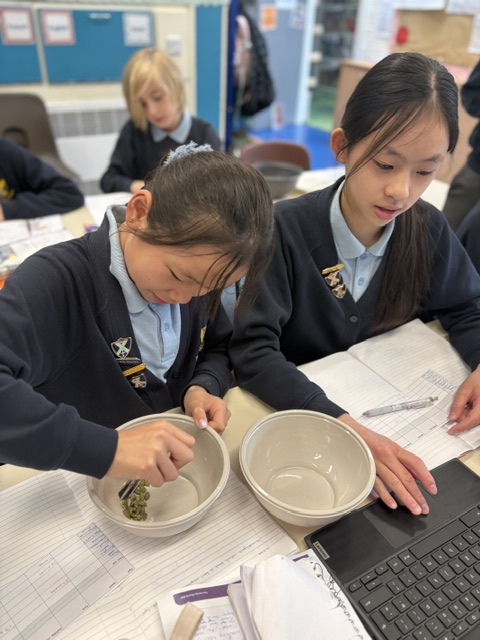
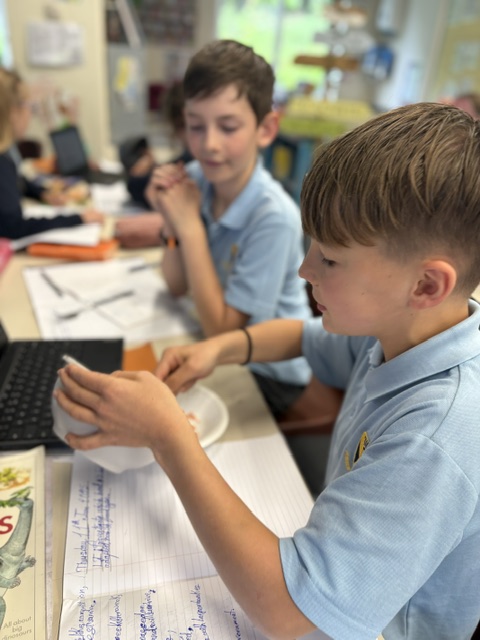
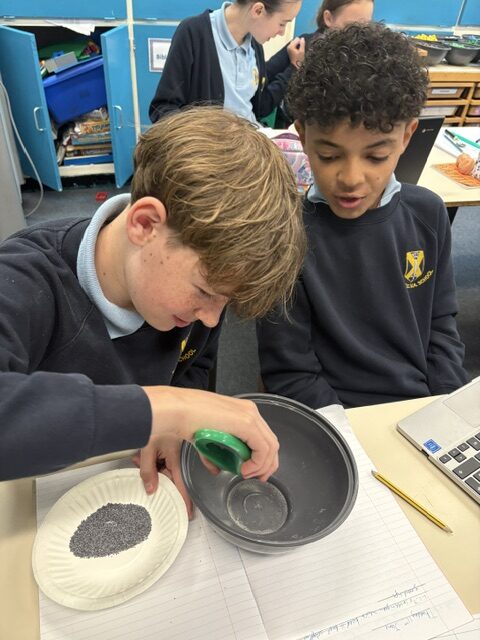
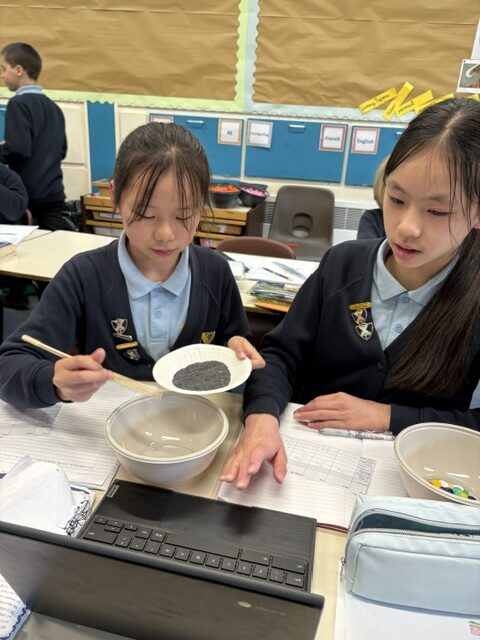
Our Science topic this term is ‘Evolution and Inheritance’. As part of this, we have been looking at Charles Darwin and his ‘Theory of Evolution’, or evolution by natural selection. In it, he explained how living things change and adapt over millions of years. It states that the best-adapted individuals in a species are more likely to survive, reproduce, and pass their helpful traits to their young. He developed his theory after his voyage aboard HMS Beagle in 1831, in which he travelled to the Galapagos Islands. It was here that he noticed that the birds on each island, whilst seemingly similar, were different in terms of both the size and the shape of their beaks. He realised that the birds had adapted according to the different food sources that were available on the different islands. In our science lesson, we conducted an experiment to test how different adaptations help different birds in collecting different types of food. We used different tools (spoon, fork, tweezers, wooden peg, bulldog clip) to represent a bird beak and then collected as much “food” (marbles, poppy seeds, pumpkin seeds, red lentils, plastic counters) as we could in a 30 second period. We then compared which bird with which beak is better at collecting which food.